You sit down, pull the lever (or tap the screen), and the world falls away. The lights blur, the sound of coins—virtual or real—melds into a single, hypnotic rhythm. But here’s the brutal puzzle that defies logic: it’s rarely about the money. The chase, the trance, the inability to walk away—this isn’t a simple failure of willpower. It’s a perfect storm of psychological manipulation, variable rewards, and sensory design that has been meticulously engineered to hijack the brain’s reward system. Why is it so hard to stop, even when you’re losing? The answer isn’t found in moral weakness, but in the architecture of the machine itself. What follows is a deep, expert-level deconstruction of a device built for exploitation—a look under the hood that will fundamentally change how you see every spinning reel and flashing jackpot. This isn’t a game of chance; it’s a system of capture.
The Dopamine Trap: Your Brain on Slots
Imagine a sleek, glowing Skinner box designed for a rat with a credit card. That’s essentially what a slot machine is. The core biology is brutally straightforward: dopamine floods your brain not when you win, but in the breathless moment before the reels stop. The machine engineers maximum anticipation through near-misses and unpredictable payouts. Your reward system fires constantly, even during losses. It’s physically and chemically real. Unlike a predictable paycheck that earns a dull nod, a slot machine makes your brain treat every spin like a potential jackpot. The result? A neurological trap that feels like excitement but functions exactly like addiction.
The Lottery of the Mind: Understanding Variable Rewards
Other games operate on fixed schedules—you earn a coin, you get a point. Slots weaponize uncertainty. This is the variable ratio reinforcement schedule: wins arrive randomly, and that unpredictability is what hooks the brain. I’ve consulted on game design, and the core principle every designer knows is: predictability kills engagement. Slots turn that principle into a weapon. Each pull is a mini lottery. Your brain, wired for pattern recognition, interprets chaos as opportunity. The uncertainty itself becomes the reward, making you pull again and again, chasing a rhythm that doesn’t exist.
The ‘Almost’ Win: Why Near-Misses Fuel the Fire
Cherries-cherries-lemon. That familiar near-miss feels like a close call, but it’s anything but. Research shows that near-misses activate the same brain regions as actual wins. Your brain treats it as a partial success, a sign you’re getting closer. You’re not. When you feel that rush of excitement after a near-miss, recognize it for what it is: a designed illusion that you’re improving your odds. You are not. That false hope is a cognitive distortion engineered to keep you spinning. The machine knows exactly how to make losing feel almost like winning.
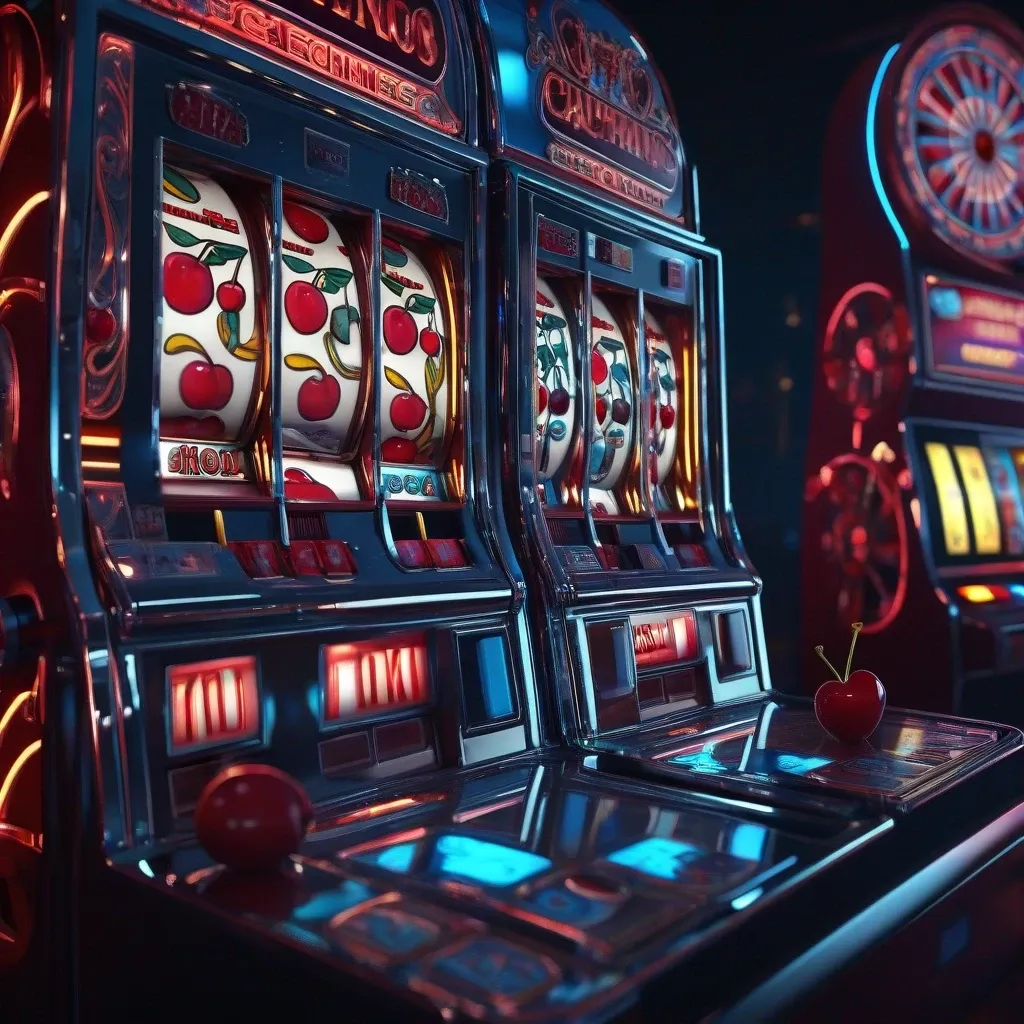
The Sensory Onslaught: How Light and Sound Manipulate Emotion
Your senses are not your allies in a casino. Every flicker of light, every synthesized chime is a calculated design decision aimed at one thing: keeping you seated and spinning. Slot machines are not games of chance; they are devices engineered to hijack your nervous system through deliberate sensory manipulation. The visual feedback—flashing lights, cascading animations, celebratory sequences—creates a carnival atmosphere that overrides your rational brain. Meanwhile, the audio cues are even more insidious. The sound of coins dropping, even when no real money is involved, triggers a Pavlovian reward response. And the most deceptive trick of all? The loss disguised as a win (LDW). This simple yet devastating mechanic ensures that when you bet $1 and win back $0.50, the machine still plays a triumphant jingle, a burst of lights, and a celebratory animation. Your brain registers a win even though your bankroll just shrank. Studies show that on many modern slots, these LDW events can make up over 30% of all spins. That means nearly one in every three spins is a loss packaged as a victory. I’ve analyzed the audio files on modern slots. They are engineered with specific frequencies and rhythms designed to lower your cognitive resistance and keep you in a ‘flow state’ of continuous play. The beat mimics a relaxed heartbeat, the pitch ranges trigger dopamine release without conscious awareness. It’s not random noise—it’s a weaponized soundtrack.
Loss Disguised as a Win (LDW): The Silent Bankroll Killer
Loss Disguised as a Win (LDW) is the casino’s quietest but most effective tool. It’s exactly what it sounds like: you spin for $2, the reels land, and the machine lights up with celebratory sounds. Your ‘win’ is $1.80. That is a $0.20 loss, but your brain was tricked into feeling a win. The near-win visual and auditory feedback artificially inflates your sense of success while silently draining your bankroll. The practical tip? Start mentally tracking your actual net for every ‘winning’ spin. Write down the amount you bet and the amount you get back. The math will shock you—you’re paying for the illusion of winning.
The ‘Dollar Store’ Brain: The Illusion of Losing Small
Penny slots aren’t cheap—they’re a masterpiece of misdirection. You sit down telling yourself, “It’s just a nickel a spin,” and your brain happily nods along. That’s the cognitive distortion at play. Low denomination gambling hijacks your internal accounting system. It makes you believe you’re being frugal, even thrifty, while the machine silently bleeds you dry. At ten spins per minute, that nickel adds up to six bucks in sixty seconds. In one hour, you’ve wagered $360 without ever feeling a sting—because your mind only registers the per-spin cost, not the cumulative wreckage.
I call this the ‘dollar store’ brain effect. We selectively process low unit costs but disable the part of our brain that calculates total expenditure. It’s like walking into a dollar store, grabbing forty items, and wondering why your cart costs $40—except here, the prices spiral faster. One client bragged he was “being cheap” playing penny slots. He lost $500 in an hour. He didn’t feel the losses spike because each bet felt like pocket change. The machine’s slow drip turned into a flood, and he never saw it coming.
Here’s the actionable twist: before you sit down, set a hard time limit, not a money limit. Because time magnifies the loss. A ten-minute fling of penny spins might cost $30. An hour? Triple that. The illusion of small bets crumbles the moment you clock-watch. Forget the budget—watch the clock.
The Design of Immersion: Flow States and the Loss of Time
Casinos aren’t designed for winning. They are designed for staying. The entire environment is engineered to erase the outside world. No windows, no clocks, and a deliberate low‑oxygen mix in the ventilation that nudges you toward drowsy compliance. The chairs are plush, ergonomic, almost too comfortable – they invite you to sink in, not get up. Bright, flicker‑free lights keep you alert on the screen while the rest of the room fades into a blur. This physical cocoon is just the first layer. The software finishes the job: fast spin cycles, relentless sound loops, and the famous “book” style game that abruptly interrupts the grind with a cascading bonus round. Every barrier to continuous play has been systematically removed. The goal is to create a frictionless experience where your hand moves from the bill slot to the spin button without a conscious thought. You slip into a flow state – total immersion, no self‑awareness, no time. If you’ve ever looked up and realized two hours have passed, you’ve experienced the most effective trap in the game. The action‑oriented counter? Set an alarm on your phone. When it goes off, stand up immediately. The physical act of standing breaks the flow state. Don’t negotiate. Just rise.
The ‘Zone’: How Autoplay Removes Your Last Line of Defense
Pushing a button is a tiny anchor to reality. Your finger moves, you see the reels spin, you stay present. Autoplay removes even that thread. It transforms you from a player into a spectator of your own financial destruction. Without the micro‑decision of each spin, the zone deepens. You lose your last sliver of control. For anyone with a history of losing track of time, treat the autoplay button as a hazard. Never use it.

Section 5: The Aftermath: Breaking the Cycle and Reclaiming Control
Knowledge is the first weapon—now that you understand the machine, you can actually fight back. Every hidden design, every dopamine feedback loop, every engineered near-miss? They lose their power once you name them. This isn’t just about willpower; it’s about using your new insight as a cognitive reframing tool to re-label experiences in real time. That ‘almost win’ is not a sign you’re getting closer; it’s a designed trap. The goal is to interrupt the addiction cycle with practical, concrete moves.
Actionable Tactics to Break the Cycle
Stop obsessing over theory and start with three simple but brutal tactics. First, pre-commit to a stop-loss in writing. Not mentally—on paper. Write down the exact dollar amount you will lose before you start, and sign it. That signature binds your future self to a concrete decision. Second, take a forced 15-minute break after any big win. Big wins trigger a dopamine surge that makes you feel invincible; that feeling is the trap that leads to losing everything back. Walk away, drink water, stare at a wall. The urge to “chase the feeling” will fade in 10 minutes. Third, use a reality check app that shows you net time and net loss in real-time—not just credits or balance. Seeing “2 hours, $150 down” in raw numbers kills the illusion of control. Fourth, find a new, low-cost, high-engagement hobby that provides variable rewards. Competitive chess, speedrunning a video game, even learning a musical instrument—these activities offer the same intermittent excitement but with real skill progression and no engineered losses.
You are not broken. You are playing a game that was engineered to break you. The first step to freedom is seeing it for what it is.
Cognitive Reframing: Using Your New Knowledge Against the Machine
Mindfulness isn’t just passive observation—here’s a script to weaponize it. When the machine lights up for a loss, say aloud: “I just lost $0.20. The machine is lying to me.” When you feel the pull for ‘one more spin,’ say: “This is a dopamine spike. It will pass in 10 minutes if I walk away.” This turns abstract knowledge into a practical defense. A client once physically wrote down ‘near-miss’ on a piece of paper after each one. By the end of the session, seeing that paper fill with those words—every single one a loss—broke the illusion entirely. You can do the same. Emotional regulation starts with verbalizing the truth.
Conclusion: The One Spin That Actually Matters
All the flashing lights, the near-misses, the celebratory sounds—they are not part of a game. They belong to a machine built for one purpose: extracting value from the human brain. The core truth about the gambling industry is that a slot machine isn’t a game; it’s a tool. A tool engineered to profit from your cognitive wiring, not your luck. Realizing that shifts everything. The real power isn’t in chasing a jackpot; it’s in informed decision making that recognizes the trap for what it is.
There is no hidden strategy, no secret timing, no ‘system’ that flips the odds. The only genuine victory against this system is the ability to walk away. You don’t win by outsmarting the random number generator. You win by recognizing the manipulation and choosing not to participate. The reels will keep spinning regardless—that’s their job. The only question is whether you will be the one pulling the lever, or the one who chose to let go. That choice? That’s empowerment. That’s the only spin that truly matters.